Product Overview
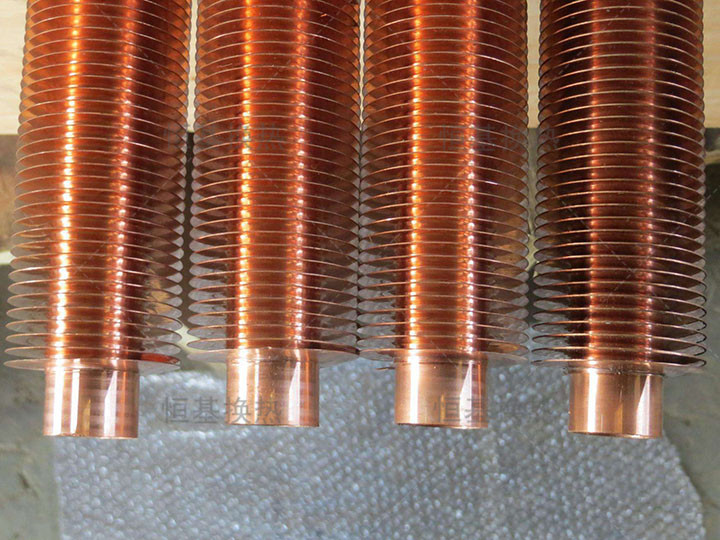
Finned tube is a type of heat exchange tube that aims to improve heat transfer efficiency by adding fins to the surface of the tube to increase its outer surface area (or inner surface area). As a heat exchange element, finned tubes work in high-temperature flue gas conditions for a long time. For example, finned tubes used in boiler heat exchangers are used in harsh environments with high temperature, high pressure, and corrosive atmospheres. This requires finned tubes to have high performance indicators.
1. Anti corrosion performance
2. Wear resistance performance
3. Low contact thermal resistance
4. High stability
5. Anti dust accumulation ability
Product Category
There are many types of finned tubes, and new varieties are constantly emerging. Fin tubes can generally be classified according to the following aspects in application scenarios:
Classified by processing technology: 1. String tube (sleeve tube); 2. Tension wrapped finned tube; 3. Inlaid tube; 4. Whole rolled finned tube; 5. Casting finned tubes; 6. Welded finned tubes, including high-frequency welded finned tubes, submerged arc welded finned tubes, etc.
Classified by fin shape: 1. Square, rectangular, circular finned tubes; 2. Spiral finned tube; 3. Corrugated finned tube; 4. Serrated finned tube; 5. Needle shaped finned tube; 6. Longitudinal finned tube; 7. Integral plate-shaped finned tube (plate fin), etc.
Classified by material: 1. Copper, Al, Cu/Al finned tubes; 2. Carbon steel, stainless steel, carbon steel/stainless steel finned tube; 3. Cast iron (cast steel) finned tubes, etc.
Classified by purpose: finned tubes for air conditioning; Finned tubes for air cooling; Boiler: finned tubes used for water-cooled wall, economizer, and air preheater respectively; Finned tubes for waste heat recovery in various kilns and industrial furnaces; Other special purpose finned tubes, etc.
Product advantages
1. Efficient and energy-saving: Its heat transfer coefficient is between 3000-4500 kcal/m2 ·° C · h, which is 3-5 times higher than the thermal efficiency of shell and tube heat exchangers.
2. Compact structure: Plate heat exchangers have tightly arranged plates, and compared with other types of heat exchangers, plate heat exchangers occupy less space and space. Plate heat exchangers with the same heat transfer area are only 1/5 of shell and tube heat exchangers.
3. Easy to clean and disassemble: Plate heat exchangers rely on clamping bolts to clamp the clamping plates, making disassembly and assembly convenient. They can be opened and cleaned at any time. At the same time, due to the smooth surface and high turbulence, they are not easy to scale.
4. Long service life: Plate heat exchangers are made of stainless steel or titanium alloy plates, which can withstand various corrosive media. The rubber pads can be replaced and are easy to disassemble and repair.
5. Strong adaptability: Plate heat exchanger plates are independent components that can be added or removed according to requirements, with various forms; Suitable for various requirements of different processes.
6. No liquid leakage, the sealing groove of the plate heat exchanger is equipped with a drainage channel, and various media will not collude. Even if there is a leak, the media will always be discharged outward.






 139 0618 6561